
Table of Contents
- 1. Use a Game Rack System to Organize Mahjong Tiles
- 2. Sort Tiles by Category and Suit During Play
- 3. Best Mahjong Tile Cases for Storage and Transport
- 4. Mahjong Rack Storage Ideas for Small Spaces
- 5. Label and Customize Your Storage Containers
- 6. Create a Dedicated Game Corner Setup
- 7. Maintain and Preserve Your Tiles for Long-Term Play
- Frequently Asked Questions
Last Updated: September 30, 2026
1. Use a Game Rack System to Organize Mahjong Tiles
A game rack system is the fastest way to organize mahjong tiles during active play. These racks hold your tiles upright and keep them sorted by suit and rank, so you can see all your options at a glance without fumbling through a pile.
Most racks use a wooden or acrylic base with individual slots for each tile. You slide tiles into these slots as you draw them. A magnetic pusher helps you move tiles smoothly without knocking them over. This setup works especially well for American Mah Jongg, where quick access to your hand matters.
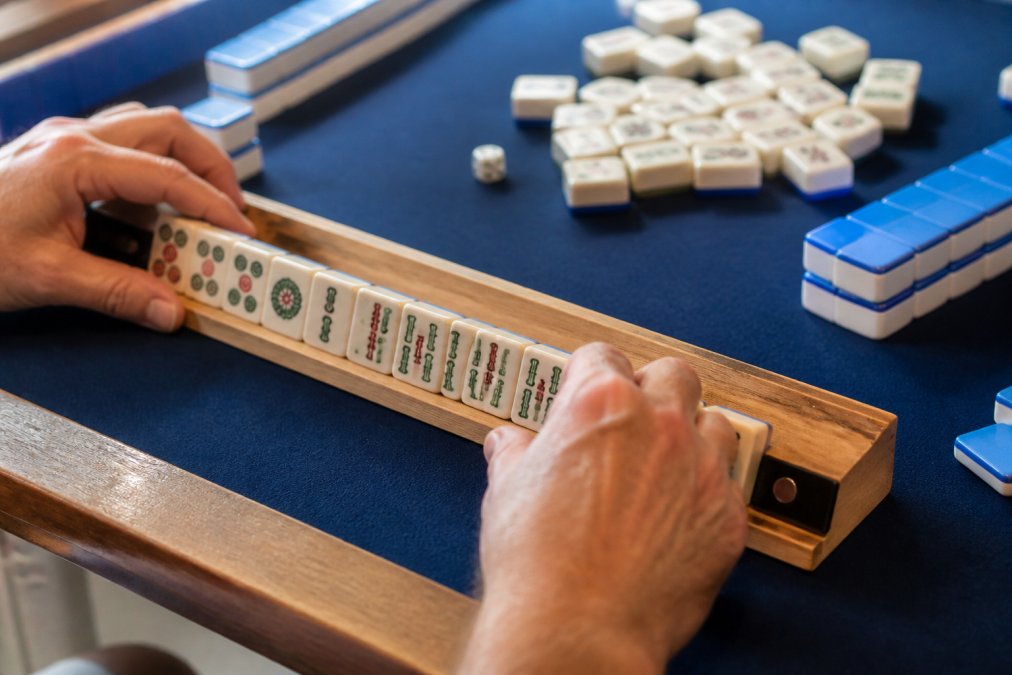
The best racks have these features:
- Slots deep enough to hold tiles securely without tipping
- A smooth pusher that glides without scratching tiles
- Enough space to display 14-16 tiles comfortably
- Lightweight design so you can move it easily between games
A quality game rack eliminates the stress of managing your hand. You'll play faster, make better decisions, and enjoy the game more.
2. Sort Tiles by Category and Suit During Play
Sorting your tiles by suit and category is the foundation of good organization. When your tiles are grouped logically, you spot winning patterns faster and avoid missing combinations.
During gameplay, arrange your tiles in this order from left to right:
- Craks (numbered tiles, 1-9)
- Bams (bamboo tiles, 1-9)
- Dots (circle tiles, 1-9)
- Honors (winds and dragons)
- Flowers and seasons (if playing with jokers)
Within each suit, order tiles from lowest to highest number. This system lets you scan your hand in seconds and identify pairs, pungs, and kongs instantly.
Many players make the mistake of randomly placing tiles as they draw them. This wastes mental energy and slows your game. A few seconds spent organizing at the start of each turn saves you minutes of confusion later.
3. Best Mahjong Tile Cases for Storage and Transport
Choosing the right storage case protects your tiles between games and makes transport simple. The best mahjong tile cases keep tiles organized, prevent damage, and fit easily in a car or closet.
Look for cases with these qualities:
- Divided compartments for each suit and honors
- Soft interior padding to prevent chipping
- Durable exterior that resists dents and scratches
- Latches or zippers that keep the case sealed during transport
- Lightweight enough to carry one-handed
Hard-shell cases offer maximum protection but weigh more. Soft-sided cases are lighter and easier to store in tight spaces. Many serious players own both: a hard case for travel and a soft case for club meetings.
The compartments matter most. Cases with separate slots for each tile category let you grab exactly what you need without dumping everything out. This saves setup time before each game.
If you play at multiple locations each week, invest in a quality case. It pays for itself in convenience and protection within a few months of regular use.
4. Mahjong Rack Storage Ideas for Small Spaces
Small apartments and tight storage areas need creative solutions. You can organize your mahjong tiles and racks without taking over your entire closet or shelf.
Try these space-saving approaches:
- Wall-mounted shelves above a desk or game table
- Stackable nesting trays that slide into a cabinet
- Vertical storage carts with narrow rolling shelves
- Under-bed storage boxes with dividers
- Closet organizers with clear plastic bins
Nesting trays are ideal for small spaces. They stack flat when not in use and pull out when you need them. You can store a complete set in less than a square foot of shelf space.
A dedicated game corner doesn't need much room. A small table, one storage cart, and a comfortable chair create a complete setup in a 4x4 foot area. Use vertical space instead of floor space whenever possible.
5. Label and Customize Your Storage Containers
Labeling your containers saves time and prevents confusion when you're grabbing tiles for a game. Clear labels let anyone in your household find what they need without asking.
Use these labeling methods:
- Waterproof label makers for permanent identification
- Color-coded stickers for different suits (red for craks, green for bams, etc.)
- Handwritten labels on masking tape for temporary organization
- Printed labels with tile images so non-players can identify containers
- Laminated index cards taped to container sides
Color coding works especially well for visual learners. Assign one color to each suit and mark your containers accordingly. This speeds up setup and makes cleanup faster after games.
Customizing containers adds personality to your setup. Many players decorate boxes with retro designs, photos, or themed artwork. This turns storage into part of your game corner's charm.
AmericaMahjongfun.com offers printable organizers. You can print labels, score sheets, and game schedules to create a cohesive system that looks intentional and organized.
6. Create a Dedicated Game Corner Setup
A dedicated game corner transforms how you experience mahjong. Instead of setting up and breaking down each time, your tiles stay ready to play. This encourages more frequent games and makes hosting easier.
Your game corner needs:
- A sturdy table (at least 3x3 feet for four players)
- Four comfortable chairs with good back support
- Storage within arm's reach for tiles and accessories
- Good lighting from above and sides
- A small side table for snacks and score sheets
Lighting matters more than most players realize. Poor lighting causes eye strain and makes reading tiles difficult. Install a bright overhead light plus a floor lamp or two for even illumination across the table.
Ergonomic seating prevents back pain during longer games. Chairs that support your lower back and allow your feet to rest flat on the floor keep you comfortable for hours. This is especially important for older players who sit for extended periods.
Position your storage at table height, between 24-36 inches off the ground. This lets you reach tiles without standing or bending awkwardly. A low cart or shelf unit works perfectly for this purpose.
7. Maintain and Preserve Your Tiles for Long-Term Play
Proper maintenance keeps your tiles beautiful and functional for decades. Tiles are durable, but they need care to prevent damage that affects gameplay.
Follow these preservation practices:
- Clean tiles with a soft, dry cloth after each game
- Store tiles in a cool, dry place away from direct sunlight
- Avoid extreme temperature changes that can warp wooden tiles
- Keep tiles away from moisture and humidity
- Handle tiles gently to prevent chips and cracks
- Check for loose or cracked tiles before each game
Sunlight fades tile colors and weakens the glue that holds bamboo backing to tile faces. Store your tiles in a closet or cabinet, not on an open shelf near windows.
Humidity causes wooden tiles to swell and warp. If you live in a humid climate, store tiles with silica gel packets to absorb excess moisture. Replace packets every few months to maintain effectiveness.
Damaged tiles affect your game. A cracked tile is harder to read, and a loose backing tile can fall apart during play. Inspect your set quarterly and replace damaged tiles promptly. Quality replacement tiles cost less than buying a new complete set.
Many players don't realize that tile preservation extends the life of their investment. A well-maintained set plays beautifully for 20+ years. Neglected tiles deteriorate within 5-7 years.
Organizing your mahjong tiles transforms your entire game experience. Whether you're playing casually with friends or competing in club tournaments, a clear system helps you play faster, make better decisions, and enjoy every hand. Start with a quality game rack, sort your tiles by suit, and invest in proper storage. Your tiles will stay protected, and your games will flow smoothly from setup to cleanup. AmericaMahjongfun.com's printable organizers and scoring tools help you complete your setup with custom labels, game schedules, and score sheets designed specifically for American Mah Jongg players. Get started with our instant digital downloads and bring organization and personality to your game corner today.
Frequently Asked Questions
What is the best way to organize mahjong tiles during a game?
Use a game rack or tile tray to arrange tiles by suit and category as you draw them. Position flowers and jokers at one end for quick reference. A magnetic pusher helps slide tiles without disturbing the arrangement. This keeps your hand organized, speeds up play, and prevents accidental tile reveals to opponents.
What are the best mahjong tile cases for protecting my set?
Look for acrylic or hard plastic cases with nesting trays that separate tiles by type. Cases with foam padding or individual slots prevent tiles from shifting during transport. For American Mahjong sets, choose cases designed to hold the full tile count plus racks and pushers. Durable cases protect tiles from damage and keep everything in one place.
How can I organize mahjong tiles in a small apartment?
Use vertical storage solutions like wall-mounted shelves or a compact storage cart with multiple tiers. Stack nesting trays inside a single cabinet or closet shelf to save floor space. Consider a dedicated storage container that slides under a bed or fits in a game table's built-in compartments. Labeling each tray lets you find what you need quickly without spreading tiles across your space.
What's the easiest way to label my mahjong tiles for identification?
Use waterproof labels or a label maker to mark storage trays by suit, category, or set name. Color-coded labels work well if you own multiple sets. Label both the container and the dividers inside to show which tiles belong where. For travel sets, label the case itself so you know exactly what's packed. Clear labeling saves setup time and prevents mixing tiles from different sets.