
Table of Contents
- Early-Game Strategy and Hand Selection
- Best Practices for the Charleston and Passing Ritual
- Organizing Your Mahjong Rack for Maximum Flexibility
- Managing Pairs, Pungs, and Kongs
- Discarding Strategy and Tile Tracking
- American Mahjong Defensive Play vs. Offensive Strategy
- Advanced Techniques: Joker Management and Hand Patterns
- Conclusion
- Frequently Asked Questions
Last Updated: September 19, 2026
Early-Game Strategy and Hand Selection
American mahjong strategy begins with your early decisions: what you keep from the Charleston, what you pass, and how you evaluate your starting hand.
Most players hold onto tiles that "might" fit a pattern. The best players identify one or two viable hand patterns early and ruthlessly discard everything else. This focus creates flexibility: when you know what you're building toward, you spot opportunities and adapt faster than players juggling five possibilities.
Winning players narrow their options by the time they've picked six or seven tiles. They're not locked in, they'll pivot if needed, but they've eliminated the noise, letting them track discards and adjust strategy.
Best Practices for the Charleston and Passing Ritual
The Charleston is where your first strategic choice happens: you're reading the table, controlling information, and positioning yourself for success.
The passing ritual works in three rounds: right, left, then across. The skill lies in decoding what other players signal and deliberately misleading them about your intentions.
Reading the Charleston: What Passing Patterns Reveal
When a player passes three tiles of the same suit in the first pass, they signal weakness in that suit. Experienced players misdirect: pass bamboo you need, and receive it back from players who assume you don't want it.
The third pass (across) is most revealing. If you pass dragons in all three passes, observant players know you're not building a dragon hand and will hoard dragons, knowing you won't claim them.
The Misdirection Play
Advanced players misdirect by passing tiles they need. Pass a character tile in the first pass to signal weakness; when characters return, other players won't claim them aggressively, creating space for your character hand.
Successful misdirection requires consistency: if you pass characters in the Charleston, follow through by discarding winds early. Misdirection only works if it's believable.
Defensive Charleston Passing
In a weak position, use the Charleston to gather information. Pass tiles that reveal genuine weakness, this honest signal protects you by setting accurate expectations.
If you pass three bamboo and receive three back, bamboo is abundant and will stay in the discard pile longer. If you pass three dots and receive none back, dots are hot and contested.
The Psychology of Timing
Passing speed signals intent: immediate passes suggest worthless tiles; deliberation suggests valuable ones. In club play, timing is read as carefully as the tiles themselves.
Organizing Your Mahjong Rack for Maximum Flexibility
Rack organization is invisible to others but critical: organize by suit and sequence to spot winning tiles instantly.
Separate suits (bamboo, characters, dots, winds, dragons, flowers), then arrange each suit in sequence one to nine. This layout lets you see patterns instantly and know where new tiles belong.
Position pairs that might become kongs at the front. Place tiles that fit multiple patterns (like fives) where you can see them quickly.
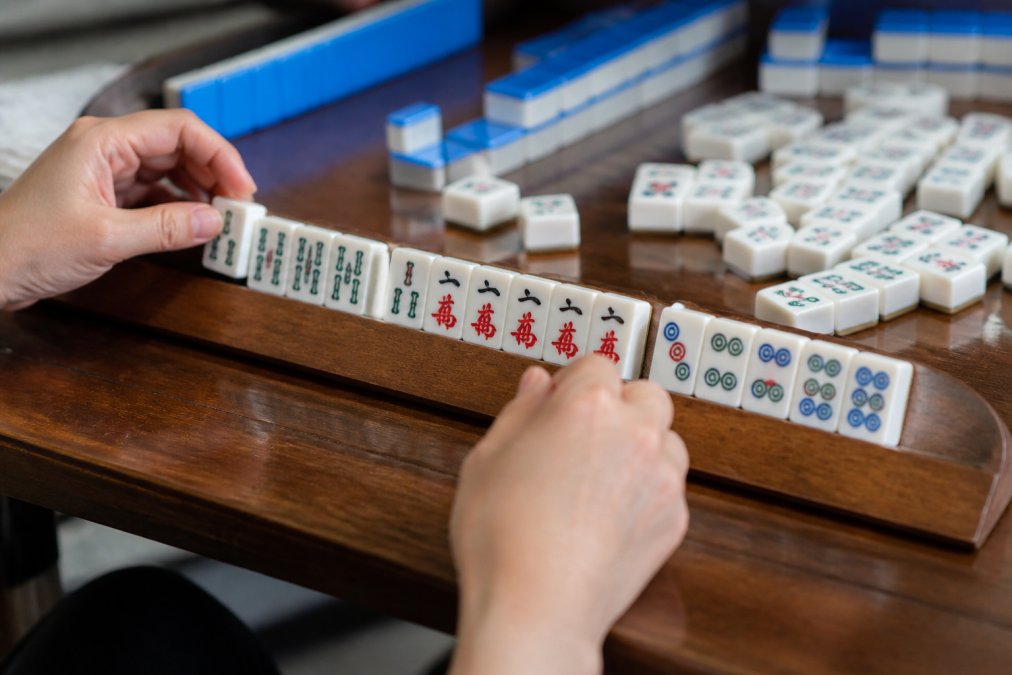
Organize once at the start, then make minimal adjustments. This consistency helps you play faster and keeps focus on strategy.
Managing Pairs, Pungs, and Kongs
A pair is two identical tiles, a pung is three, and a kong is four. Kongs give a huge advantage: you draw a replacement tile from the wall.
Claim kongs early to maximize tile draws, unless you're in a defensive position where revealing strength invites aggressive discards.
Pungs are solid melds, but chasing four or five pungs means competing with other players. A hand with two pungs and two sequences is often more achievable than four pungs.
Discarding Strategy and Tile Tracking
Discarding separates casual players from serious ones: every tile you throw away is information for the table.
Defensive discarding means throwing tiles that help no one. Discard tiles that appear least frequently in winning hands, typically ones and nines, unless those tiles are hot in the current game.
Offensive discarding means throwing tiles that might help you later, betting you'll pick them up again. This works early but becomes riskier as more tiles are exposed.
Tile tracking separates winners from everyone else.
American Mahjong Defensive Play vs. Offensive Strategy
Defensive play means discarding safely and slowing development. Offensive play means pursuing winning hands aggressively and accepting higher risk.
Advanced Techniques: Joker Management and Hand Patterns
Jokers are wildcard tiles worth more than regular tiles. The strategic tension: use jokers early to develop your hand faster, or save them for your final winning hand?
Joker Deployment Strategy
Joker Baiting: The Tactical Weapon
- Moderately useful: A tile that fits common melds (fives, sixes, sevens) but isn't essential to your hand. Discarding a one or nine is too obviously weak; discarding a five is plausibly valuable.
- Contextually hot: If the discard pile shows three bamboos already discarded, a fourth bamboo looks rare and valuable. An opponent will more likely claim it with a joker.
- Timed strategically: Bait early in the hand when jokers are abundant and opponents are still developing. Baiting in the endgame is less effective because opponents are more cautious.
Recognizing When You've Been Baited
Hand Patterns and Joker Efficiency
Joker Visibility and Table Pressure
Conclusion
The best strategy for American mahjong combines early focus with constant adaptation. You commit to a direction, track what's being discarded, manage your jokers strategically, and shift between offensive and defensive play based on the game state. Most importantly, you organize your rack for clarity, discard with purpose, and read the table to anticipate what other players are building.
Frequently Asked Questions
What is the best strategy for American mahjong hand selection?
Choose hands with flexibility and multiple winning paths. Look for hands with consecutive runs across suits, mixed pairs and pungs, and tiles that work together. Avoid hands requiring the annual card or specific jokers early in the game. Strong hands have 8-10 tiles that connect naturally, leaving room to adapt as tiles are drawn. The key is balancing your desired hand against what tiles are likely in play.
How important is tile tracking in American mahjong strategy?
Tile tracking is essential for advanced play. Pay attention to what your opponents discard and pick up. This reveals their hand direction and helps you avoid discarding tiles they need. Track which tiles have been picked from the wall and estimate remaining hot tiles. Players who track tiles make smarter discard decisions and identify when to shift strategies, significantly improving win rates.
What are the best practices for the Charleston passing ritual?
During the Charleston, pass tiles that don't fit your hand or that you suspect others need. Pass dangerous tiles (ones likely to help opponents) to the right player. Study what others pass to you, it reveals their hand direction. In the second and third passes, refine your passes based on what you received. Never pass all tiles of one suit unless intentional. The Charleston sets your hand's foundation, so strategic passing directly impacts your winning chances.
Why is American mahjong defensive play important?
Defensive play prevents opponents from winning while you build your hand. Discard tiles others are unlikely to need, especially when someone is close to winning. Watch for hot tiles, those being picked frequently. Avoid discarding tiles that complete sequences or pairs for other players. Strong defensive play buys you time and forces opponents to work harder for their wins. Balance offense and defense: push for your hand while blocking others.
How do jokers affect American mahjong strategy?
Jokers are wildcards that substitute for any tile, making them valuable for completing hands quickly. Use jokers strategically: save them for critical tiles you need, not easy replacements. Avoid using jokers early unless necessary, you may need them later. Advanced players bait opponents into discarding tiles jokers can replace. Never waste a joker on a tile likely to appear naturally. Joker management separates winning players from casual ones.
What should I do if I keep losing at American mahjong?
Review your hand selection, choose hands with more flexibility and fewer dependencies. Improve your tile tracking by noting discards and picks more carefully. Avoid overcommitting to a single hand; adapt when tiles aren't appearing. Practice defensive play by discarding safer tiles. Study the annual card and how it affects available hands. Play more games to build pattern recognition. Consider joining a club or playing with experienced players to learn from their strategies.
How does the annual card change American mahjong strategy?
The annual card changes which hands are possible. Study the annual card before selecting your hand. If your chosen hand requires it, confirm it's available before committing. Experienced players check the annual card immediately and adjust their strategy accordingly.
Master these fundamentals, and you'll notice your win rate climbing. The tiles will still be random, but your decisions won't be.